

Doors Open Cornwall & SDG Counties 2026!
August 11, 2026 Share on Twitter
 Share on Facebook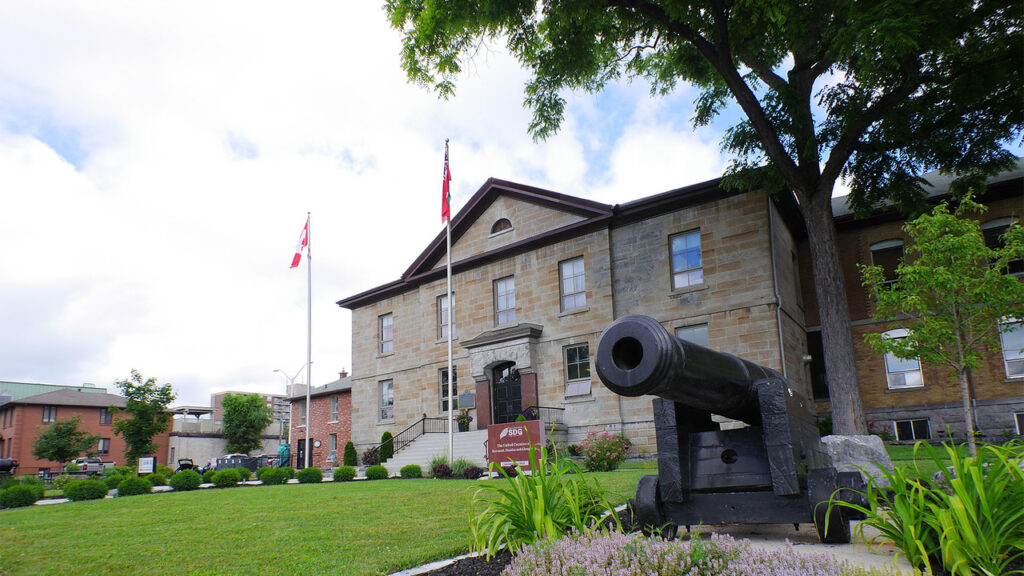
Get a behind-the-scenes look at some of the most unique and historic buildings and places in Cornwall and SDG Counties during Doors Open! During the weekend of August 15th and 16th from 10:00 AM to 4:00 PM, participating locations will be opening their doors free of charge for residents and visitors to explore and discover the stories inside. Satisfy your curiosity and get behind normally closed doors to experience intriguing interiors, where you will be inspired by rare and exceptional materials, craftsmanship and design. From historical houses to modern marvels of construction, Doors Open has something for everyone! Stay tuned for details on participating sites and hours of admission.
For more information about the venues and their exact times, visit the Doors Open Ontario website HERE
Sites
Aultsville Theatre
2 St. Lawrence Drive, Cornwall
Built in 1976, the Aultsville Theatre is a 680-seat non-profit professional theatre that hosts a variety of events annually. Come and experience theatre life on the other side of the curtain. Take a backstage tour and see where the performers prepare themselves. Get a behind-the-scenes look at the theatrical lighting, rigging and operations that bring productions and performances to life.
The Bishop’s House of Glengarry
20019 County Road 18, St. Raphael’s
This stone landmark across from the St. Raphael’s Ruins was initially a presbytery for Father Alexander Macdonell, chaplain of the Glengarry Fencibles Light Infantry during the War of 1812, and later the first Bishop of Upper Canada. In 1924, symmetrical wings were added to each side of the presbytery in its transition to the renowned girls’ boarding school, Iona Academy.
Carman House Museum
5895 County Road 1, Iroquois
The Carman House Museum — a Georgian-era limestone cottage — was built c. 1815. The family was part of the Loyalist migration after the American Revolutionary War, receiving a land grant for their service to the Crown. It is also one of only two original buildings in Iroquois that were not moved for the 1950s construction of the St. Lawrence Seaway.
Cline House Gallery & Studio
Built in 1854, Cline House remained in the Cline family until 1955 when the Cornwall Library Board took possession. This fine Regency-style building is characterized by a low hip roof and central entrance. One of Cornwall’s finest homes, Cline House was once the location of the Simon Fraser Centennial Library. Today, it is a thriving art gallery.
Cornwall Armouries
505 Fourth Street East, Cornwall
This is a recognized federal heritage building, associated with the expansion of Canada’s militia between the First and Second World Wars. People choose to become a reserve soldier to learn new skills, gain valuable experience, meet new people and serve their country. The site still houses the Stormont, Dundas and Glengarry Highlanders Militia, as well as the Cadet Corps.
Cornwall Community Museum
This museum collects, preserves and displays historical artifacts related to Cornwall and the United Counties of Stormont, Dundas and Glengarry. Their exhibit spaces host a multitude of artifacts organized by theme — the founding of New Johnstown and the Royal Townships, a turn-of-the-century kitchen, industry, law, commerce, textile, community service, health care and more. Come and explore this fascinating museum!
Cornwall Historical Walking Tour
100 Water Street East
This 6-kilometre (3.7-mile) self-guided walking tour is a voyage into Cornwall’s heritage, depicting events and points of interest from the city’s past. The tour follows nearly 30 plaques that have been erected along Cornwall’s waterfront, downtown and in parts of Le Village in the city’s east end — representing industrial links, the former Cornwall Canal and the founding of New Johnstown.
Cornwall Public Library
This designated library sits on a former orphanage site that was then acquired by the federal government to house a post office in 1953. In 1997, after the post office had moved to another location and following extensive renovations, the library moved into this building, making it Cornwall’s downtown jewel. Guided tours only.
Chrysler’s Farm Battlefield Memorial Building
The Battle of Crysler’s Farm Battlefield Memorial Building was built to commemorate the battle that took place on November 11, 1813, as part of the War of 1812. Located at the bottom of a hill created with soil from the original battlefield, visitors will find the building full of artifacts, murals, and dioramas detailing the battle between British and American forces.
Galop Canal Iroquois Landing Marina
The Iroquois Marina sits along the St. Lawrence River at the site of the historical Galop Canal. The canal system was dug in 1844, and the original lock was opened in 1847. The lock was decommissioned in the late 1950s in preparation for the flooding of the Seaway. Today, our marina sits on these historical canal walls.
Glengarry Celtic Music Hall of Fame
Glengarry County has a wealth of Celtic heritage. The Glengarry Celtic Music Hall of Fame, founded in 2003, honours individuals and groups who have contributed to the maintenance of the Celtic music culture in the county, including musicians and promotors. In addition to the recognition of the inductees, they also collect memorabilia relevant to the area’s music and culture.
Glengarry Nor’westers and Loyalist Museum
This Georgian-style building dates back to 1862. In 1967, it became a museum dedicated to depicting the story of Sir John Johnson and other Loyalists who settled in the area during the American Revolution. Special exhibits celebrate the bicentennial of the Williamstown Fair (the oldest agrarian fair in Canada) and the War of 1812.
Glengarry Pioneer Museum
Opened in 1962, the Glengarry Pioneer Museum has grown to include eight heritage buildings, including the Star Inn, a stagecoach stop in the 1860s. Its barroom is thought to be one of the oldest in Eastern Ontario. Other pioneer buildings on this site are the blacksmith shop, town hall, Orange Lodge, log barns, drive shed and cheese factory.
Chesterville Heritage Centre
The Heritage Centre, originally the Winchester Township Town Hall, served as a courthouse, drill hall, movie theatre, firehall and many other things. The Chesterville and District Historical Society took over the building in 1984 and has been collecting artifacts and researching local history since. The building is now maintained by the Township of North Dundas.
Historic SDG Jail
This jail has a rich history. It served as a maximum-security facility for nearly a century, housing some infamous criminals. It was notorious for its harsh conditions and alleged human rights violations. Today, the jail stands as a museum and popular tourist attraction, offering visitors a glimpse into the prison’s past and the harsh realities of life behind bars.
Judy Neville British Home Child Museum
13740 County Road 2, Morrisburg
In collaboration with the Parks of the St. Lawrence, the Ontario East British Home Child Family operates a museum on weekends during the month of August through to Labour Day. Located inside the Aultsville Train Station are artifacts and information on British Home Children who came to this country between the 1860s and the 1930s as indentured servants.
Lost Villages Museum
16361 Fran Laflamme Drive (Ault Park), Long Sault
This site comprises 10 heritage buildings that were moved here by members of The Lost Villages Historical Society when the St. Lawrence Seaway was developed in 1958. Casualties of progress, the villages and hamlets disappeared under water but are remembered by former residents. The interiors and exteriors have been restored, and the buildings have been assembled in a village-like setting. Children who came to this country between the 1860s and the 1930s as indentured servants.
Paroisse de la Nativité-de-la-Bienheureuse-Vierge-Marie
The Paroisse de la Nativité-de-la-Bienheureuse-Vierge-Marie was the early nucleus of Cornwall’s Francophone community and has been a dominant feature of Cornwall’s skyline for over a century. The beautiful structure was designed and supervised by the second pastor of the parish, Father Paul-Antoine de Saunhac, a native of Toulouse, France. The first mass was celebrated here on Christmas Day 1891.
Priest’s Mill Arts Centre
Located in a beautifully restored 1902 section of the historic grist mill, the Priest’s Mill Arts Centre celebrates local art and heritage. Originally built in 1819 and rebuilt after several fires, the mill remains a landmark. During Doors Open, explore the “On Guard for Thee…” exhibit and a fascinating display of Chalet Glass from Cornwall’s renowned glassmaking history this year.
Saunders Hydro Dam Visitors Centre
Located along the St. Lawrence River, Ontario Power Generation’s (OPG’s) Saunders Hydro Dam Visitor Centre showcases the history of the St. Lawrence Seaway and Power Project as well as the communities and people affected. Come explore our exciting, informative and interactive displays that make our visitor centre a key tourist destination in the Cornwall area.
Sir John Johnson Manor House
Along the Raisin River lies one of the oldest homes in Ontario. This Georgian-style house was built for Sir John Johnson (a soldier, Loyalist and public servant) between 1784-92. This site was chosen because it is a natural location for water-powered mills. The house is now a National Historic Site, dedicated to preserving local history through archives and tours.
St. Columban’s Catholic Church
This Catholic church was built in 1829. The spire is 54 metres high (176 feet) and is visible from downtown Cornwall. The grounds to the east of the church were the first burial grounds of the parish. Today, it is known as the old cemetery, marked by the calvary scene sculpture composed of the headstones collected from the early cemetery.
St. Finnan’s Basilica
Founded in 1833, St. Finnan’s Basilica is one of the birthplaces of Catholicism in Canada. The Eucharist has been celebrated here since it opened. Parishioners have congregated to celebrate baptisms, marriages, confirmations and ordinations for generations. In 2021, it was designated a minor basilica by the Pope. It is renowned for its distinctive architectural styles and beautiful stained-glass windows.
St. John The Evangelist Anglican Church
This church — complete with belfry and three bells — is an architectural gem. It was built on the McLennan Estate in 1898. Surrounded by parkland, it is commonly known as “The Church in the Wildwood.” It is part of the Area Parish of the St. Lawrence, along with Christ Church Seaway in Long Sault and Trinity Church in Cornwall.
St. John’s Presbyterian Church
The congregation has its roots tracing back to the earliest settlements in Eastern Ontario, with connections to John Bethune. First worshiping in a log structure, they then moved to a larger clapboard one. This third church, built in 1889 (architect S.A. Badgley), features Romanesque Revival architecture and is known for its many beautiful stained-glass windows.
We’re here to help!
Got questions? Looking for recommendations? Cornwall Tourism is here to help! Email us at tourism@cornwall.ca and we will be happy to assist with any questions you might have.
#ExploreCornwallON
Looking for other fun things to do in Cornwall? Check out the Explore section of our website for other fun-filled activities to keep you busy. Better yet, consider extending your stay with a night at one of our great accommodations!